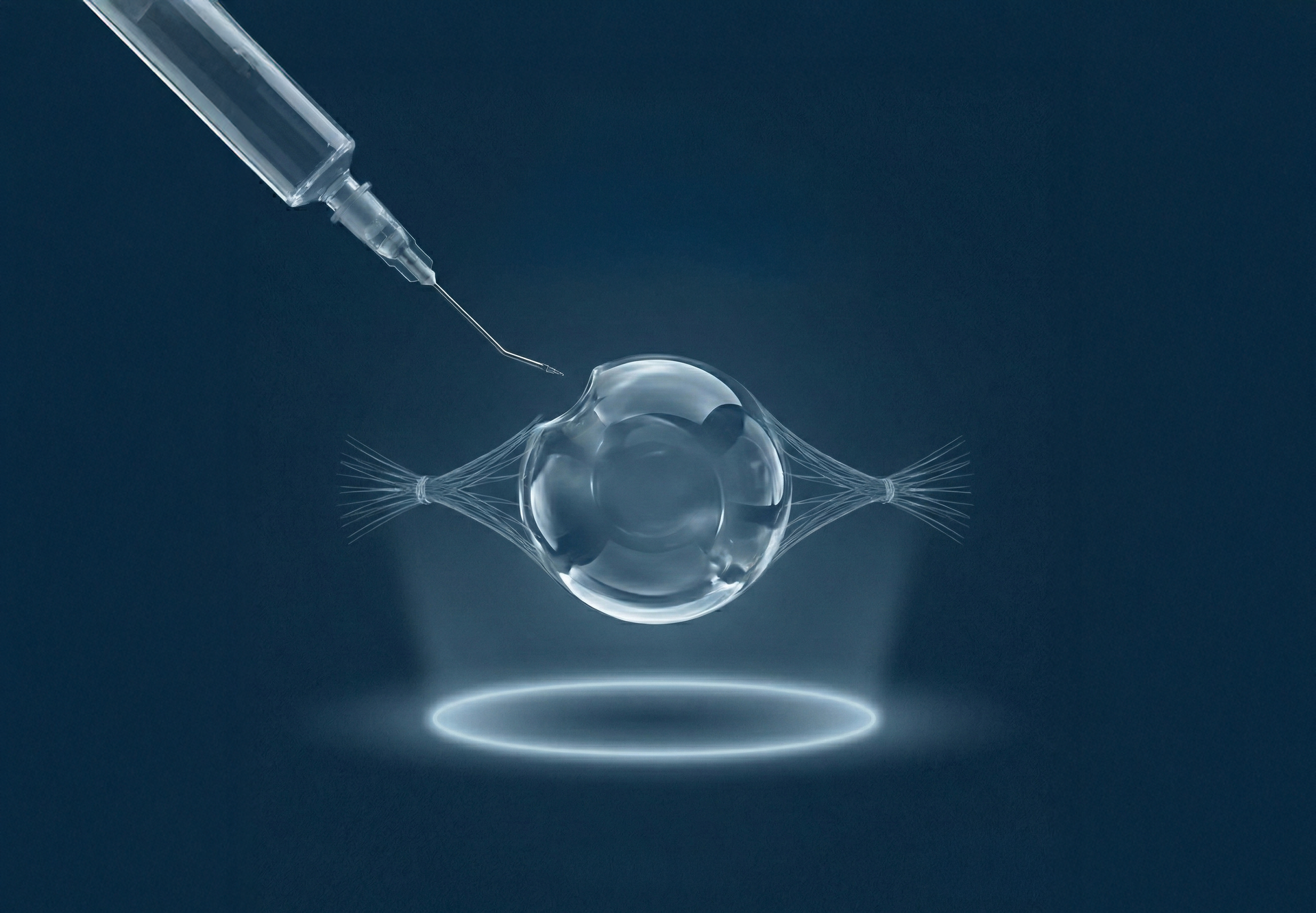
OP‑VISC & PURE‑VISCHPMC Viscoelastics • Prefilled Syringes
Two viscosity grades of the same HPMC family, each suited to a different moment in surgery. Ask what you need the OVD to do right now: to coat, spread and flow, reach for OP‑VISC. To create and hold space, reach for PURE‑VISC.
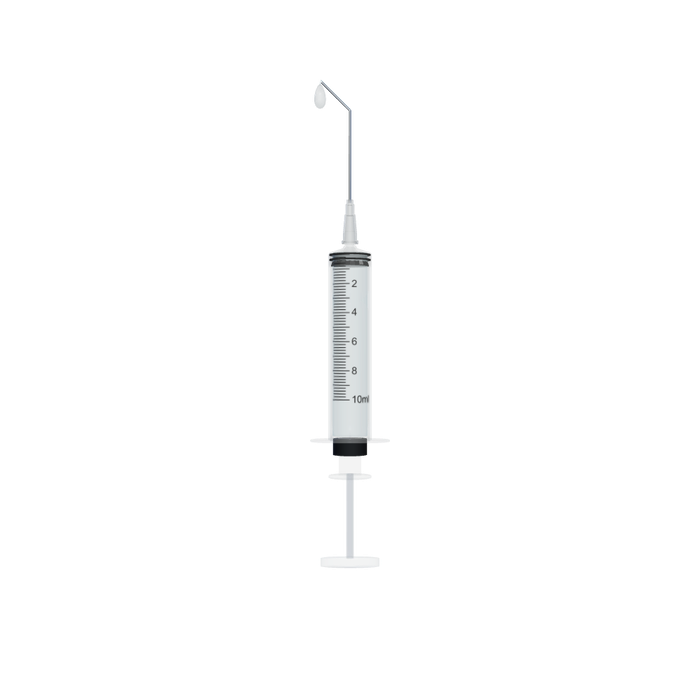
See the range up close.
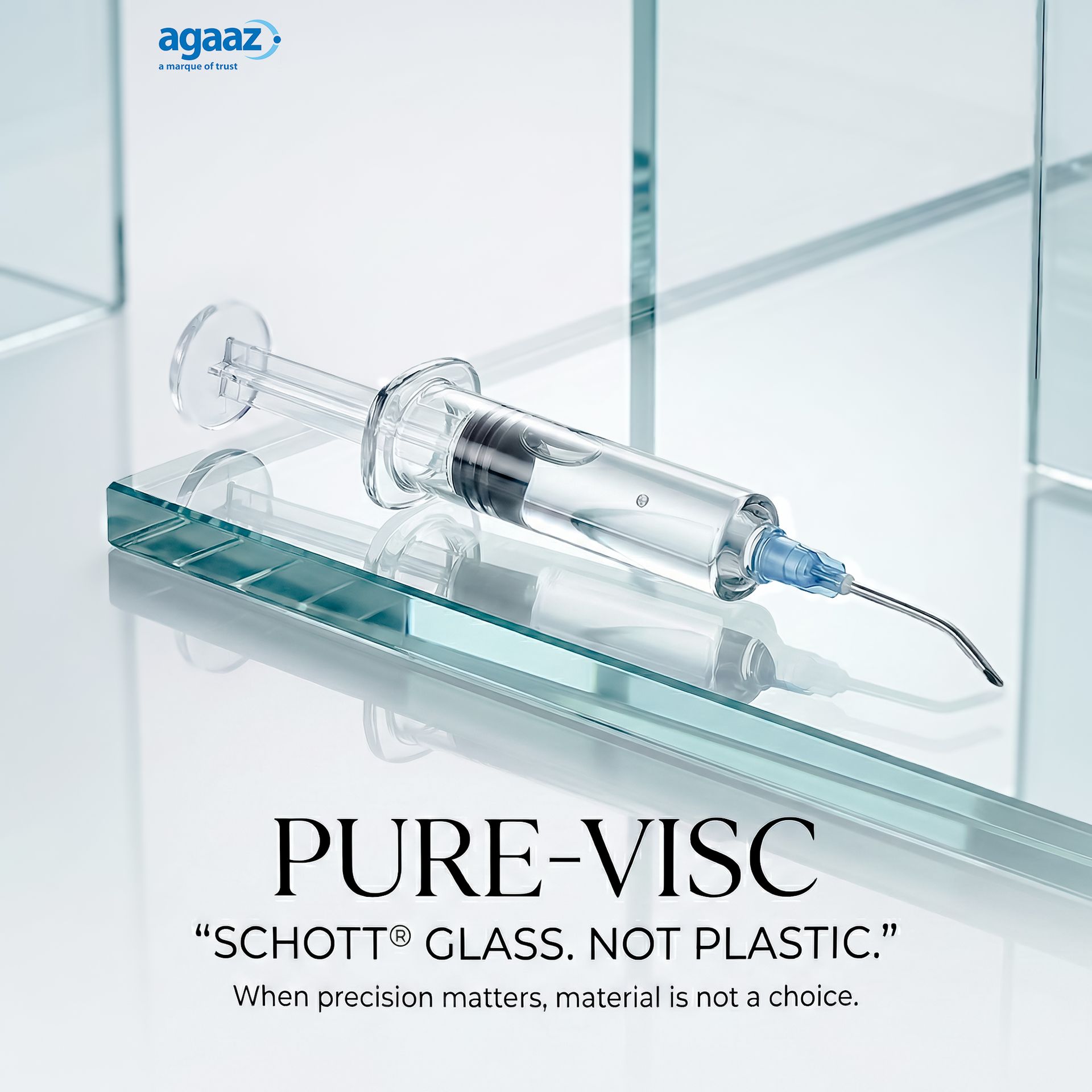
Professional packaging with clear product identity — designed for confident selection in the operating theatre.


Chamber stability and
confident surgical flow.
Both viscoelastics maintain anterior chamber depth, protect intraocular structures, and support confident surgical manipulation — the choice is the viscosity feel your surgeons prefer.
Chamber Maintenance
Maintains stable anterior chamber depth throughout surgical manoeuvres for confident, controlled procedures.
Two Viscosity Profiles
OP‑VISC (~5000 cps) for smooth flow in routine cases. PURE‑VISC (~9000 cps) for firmer space creation in demanding work.
Endothelial Protection
HPMC coats and protects the corneal endothelium during phacoemulsification and IOL implantation.
PFS Convenience
Prefilled syringe format eliminates preparation — ready for immediate, consistent delivery.
Which one fits which step of surgery?
Viscosity behaves differently at each stage of cataract surgery. This is a rheology-based reading of the published surgical sequence, not a claim that either product is universally superior — always confirm against your own technique and case.
Entering & forming the chamber
More logical choice: PURE‑VISC
Greater low-shear resistance supports space maintenance while the eye is first entered.
Capsulorhexis
More logical choice: PURE‑VISC
The higher-viscosity product tends to hold a firmer, more stable operating field.
Hydrodissection / viscodissection
More logical choice: Depends on technique
For true viscodissection, OP‑VISC is more logical — it should enter tissue planes more readily.
Phacoemulsification
More logical choice: Often OP‑VISC
Its lower viscosity is formulated to spread over the endothelium and around instruments where coating is the priority.
Cortex removal
More logical choice: Either
OP‑VISC for spreading and access; PURE‑VISC where greater chamber or bag stability is preferred.
Inflating the capsular bag
More logical choice: PURE‑VISC
Higher viscosity is formulated to better maintain the expanded bag before IOL insertion.
IOL insertion
More logical choice: PURE‑VISC for bag support
For cartridge lubrication specifically, OP‑VISC’s lower resistance may help — subject to your own compatibility check.
OVD removal
More logical choice: Cannot be determined from viscosity alone
Removal depends on cohesion, retention, polymer behaviour and aspiration technique, not viscosity alone.
How HPMC viscoelastics
support cataract surgery.
HPMC-based OVDs are established anterior-segment surgical adjuncts that coat surfaces, maintain space, and protect tissue — viscosity grade shifts which of those roles a given formulation favours.
Chamber Injection
HPMC viscoelastic is injected into the anterior chamber, immediately creating a stable working space.
Surface Coating
Their HPMC formulation is designed to coat the corneal endothelium and surrounding structures, forming a protective layer during phacoemulsification.
Space Maintenance
Maintains anterior chamber depth throughout the procedure, preventing collapse and supporting confident manipulation.
Easy Removal
At close of surgery, the viscoelastic is aspirated. HPMC is designed for straightforward removal from the anterior chamber.
Key parameters at a glance.
What the published literature says about hpmc viscoelastics in cataract surgery
The clinical case for this product category does not rest on our own material. The studies below are independent, peer-reviewed and indexed in PubMed, and they cover hpmc viscoelastics in cataract surgery as a subject. Each entry links to its PubMed record so the primary source can be read in full.
- Systematic ReviewSafety profile of long-term intraocular ophthalmic viscoelastic devices: a systematic reviewKhalil R et al. (2026) · The British journal of ophthalmology · PMID 41558833
- Randomized Controlled TrialA clinical comparison between DisCoVisc and 2% hydroxypropylmethylcellulose in phacoemulsification: a fellow eye studyEspíndola RF et al. (2012) · Clinics (Sao Paulo, Brazil) · PMID 23018304
- Randomized Controlled TrialIntraocular pressure after phacoemulsification using hydroxypropyl methylcellulose and sodium hyaluronate as viscoelasticsWaseem M et al. (2007) · Journal of Ayub Medical College, Abbottabad : JAMC · PMID 17867479
Independent peer-reviewed publications indexed in PubMed. Listed as clinical background on the molecule and device class; they are not studies of Agaaz products and imply no endorsement.
Common questions about
HPMC viscoelastics.
Tell us which viscosity
your surgeons prefer.
OP‑VISC (~5000 cps), PURE‑VISC (~9000 cps), or both? Share your country and volumes for pricing and documentation.
