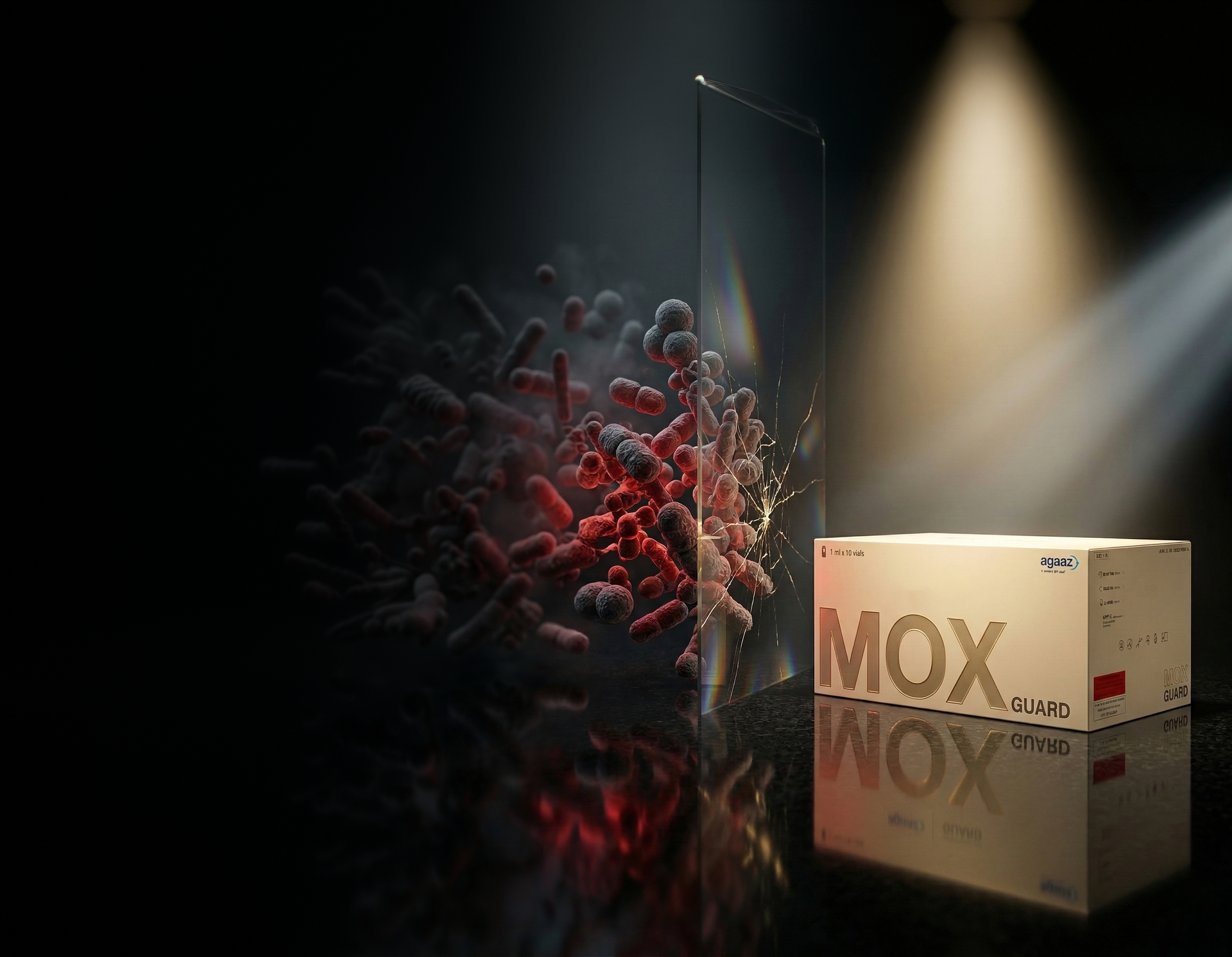
MOXGUARDIntracameral Moxifloxacin 0.5% for Endophthalmitis Prophylaxis
MOXGUARD delivers intracameral moxifloxacin 0.5% at cataract case-close, linked to a 4-fold drop in postoperative endophthalmitis in real-world data, independent of patient compliance.
2026 systematic review and meta-analysis of intracameral moxifloxacin: OR 0.24 (95% CI 0.20-0.29) versus no intracameral prophylaxis, pooled across the published literature. PubMed 41585215
The case for intracameral prophylaxis.
Intracameral moxifloxacin as an endophthalmitis-prophylaxis class is supported by independent, peer-reviewed research, not manufacturer-sponsored claims. A selection of the published evidence:
4-fold reduction in postoperative endophthalmitis
Haripriya A, et al. Aravind Eye Hospital, 116,714 eyes (Feb 2014–Apr 2015): endophthalmitis fell from 0.08% (pre-prophylaxis) to 0.02% with routine intracameral moxifloxacin. Ophthalmology, 2016.
PubMed 2652270576% reduction in the odds of endophthalmitis
2026 systematic review and meta-analysis of intracameral moxifloxacin specifically: OR 0.24 (95% CI 0.20–0.29) versus no intracameral prophylaxis, pooled across the published literature.
PubMed 41585215Confirmed in real-world Indian tertiary care
Prophylactic intracameral moxifloxacin significantly reduced post-cataract-surgery endophthalmitis at a rural Indian tertiary eye care facility.
PubMed 33821388Guideline-endorsed standard of care
The AAO Cataract Preferred Practice Pattern (2022) and ESCRS guidelines (2013) both recognize strong evidence supporting intracameral antibiotic injection as endophthalmitis prophylaxis at cataract surgery closure.
Cited studies evaluate intracameral moxifloxacin as a drug class for endophthalmitis prophylaxis and are independent of Agaaz Ophthalmics. MOXGUARD delivers moxifloxacin 0.5% via the same intracameral route studied in this literature.
Topical vs. intracameral: why the distinction matters.
Moxifloxacin ophthalmic solutions are manufactured and labeled for two very different routes of administration, and the difference is a real patient-safety issue, not just a technicality.
Diluted topical moxifloxacin
Standard 0.5% moxifloxacin eye drops are formulated, preserved, and labeled for surface application, not for direct injection into the anterior chamber. Some surgical teams have historically diluted topical moxifloxacin in-house for intracameral use, a practice documented in the clinical literature. Manual dilution introduces the possibility of concentration error, and preservatives or excipients in topical formulations are a recognized contributor to toxic anterior segment syndrome (TASS) when introduced directly into the eye.
MOXGUARD, intracameral by design
MOXGUARD is manufactured, tested, and labeled specifically for intracameral use: preservative-free, single-dose, ready-to-use at the concentration studied in the endophthalmitis-prophylaxis literature. There is no in-theatre dilution step for the surgical team to get right.
Hospital-compounded or repackaged preparations represent a third, facility-dependent pathway not shown above. General information on route-of-administration and formulation categories, not a comparison of any named competing product. Always consult product labeling and institutional protocols.
Where MOXGUARD fits
Integrated at the conclusion of cataract surgery as a single, controlled step before wound closure.
Incision & Access
Clear corneal incision and anterior chamber entry
Capsulorhexis
Anterior capsule opening with staining
Phacoemulsification
Cataractous lens removal and aspiration
IOL Implantation
Lens insertion into capsular bag
MOXGUARD
Intracameral moxifloxacin prophylaxis
Wound Closure
Hydration of incision and completion
How MOXGUARD works
inside the anterior chamber.
Moxifloxacin targets bacterial DNA gyrase and topoisomerase IV, disrupting replication across both gram-positive and gram-negative organisms.
Intracameral Injection
MOXGUARD is injected directly into the anterior chamber at the conclusion of cataract surgery, achieving immediate high drug concentration at the surgical site.
Dual-Target Inhibition
Moxifloxacin simultaneously inhibits bacterial DNA gyrase and topoisomerase IV, two essential enzymes for bacterial DNA replication and repair.
Broad-Spectrum Coverage
Effective against common endophthalmitis pathogens including Staphylococcus, Streptococcus, and gram-negative organisms frequently encountered post-operatively.
Concentration-Dependent Activity
Delivers bactericidal concentrations well above MIC levels directly where they are needed, reducing dependence on patient topical compliance post-surgery.
See MOXGUARD up close.
Designed with clear labelling and surgeon-ready packaging for fast, confident identification in the operating theatre.


Why surgeons trust
intracameral prophylaxis.
MOXGUARD addresses the critical need for reliable endophthalmitis prophylaxis, directly at the point of greatest vulnerability.
Endophthalmitis Prophylaxis
Intracameral antibiotic administration at the end of cataract surgery is increasingly recognized as an important step in reducing post-operative endophthalmitis risk.
ProphylacticCompliance Independent
Administered by the surgeon intraoperatively, removing the variable of patient adherence to topical antibiotic regimens during the critical early post-operative period.
Surgeon-ControlledReady-to-Use Format
Eliminates the need for pharmacy compounding, reducing the risk of dilution errors and contamination associated with preparation from topical formulations.
No CompoundingOptimized for Cataract Surgery
Designed specifically for the cataract surgical workflow, with appropriate concentration, volume, and packaging for seamless integration into operative protocols.
OT-ReadyTechnical profile.
Formulated and packaged for direct integration into cataract surgery workflows.
Designed for the operating theatre.
Single-Dose Presentation
1 ml single-use vial, individually packaged and sterilized for single-patient use. Supplied in packs of 10 vials.
Preservative-Free Formulation
No added preservatives: critical for intracameral administration where preservative-related toxicity is a concern.
Clear Labeling
Concentration and expiry prominently visible, supporting safe identification in fast-paced OT environments.
Storage Conditions
Store below 25°C, protected from light. No refrigeration required, practical for a range of storage and logistics conditions.
Go deeper on the evidence.
Intracameral Moxifloxacin in Cataract Surgery
— the clinical evidence and mechanism in depth
The Surgeon's Blueprint
OVD, IOL & intracameral prophylaxis — where MOXGUARD fits in a complete surgical protocol.
Cataract Surgery Consumables Manufacturer & Supplier India
— MOXGUARD alongside Agaaz's full consumables range
What the published literature says about intracameral moxifloxacin for endophthalmitis prophylaxis
The clinical case for this product category does not rest on our own material. The studies below are independent, peer-reviewed and indexed in PubMed, and they cover intracameral moxifloxacin for endophthalmitis prophylaxis as a subject. Each entry links to its PubMed record so the primary source can be read in full.
- Randomized Controlled TrialEfficacy of intracameral moxifloxacin in prevention of postcataract surgery endophthalmitis: randomized control trialSharma N et al. (2026) · Journal of cataract and refractive surgery · PMID 41064863
- Randomized Controlled TrialMacular and choroidal thickness after intracameral moxifloxacin for prevention of postcataract endophthalmitisFerreira BG et al. (2021) · Journal of cataract and refractive surgery · PMID 32818353
- Randomized Controlled TrialSafety and efficacy of intracameral moxifloxacin for prevention of post-cataract endophthalmitis: Randomized controlled clinical trialMelega MV et al. (2019) · Journal of cataract and refractive surgery · PMID 30691922
Independent peer-reviewed publications indexed in PubMed. Listed as clinical background on the molecule and device class; they are not studies of Agaaz products and imply no endorsement.
Interested in MOXGUARD?
Contact Agaaz Ophthalmics for detailed product information, regulatory documentation, or distribution enquiries.
